School is back in session.
Around this time every year, there’s that familiar, buzzing excitement of seeing everyone after a few months apart. We exchange summer stories, admire the golden, ocean-side glows, and catch up on family life. But lately, there’s another dynamic at play when school drop-offs and parking lot social events kick back into gear: the physical transformations.
I try not to judge. I really, honestly do. I am a firm believer that people should do whatever makes them feel confident in their own skin. But this year? The “improvements” are getting drastic.
Recently, I was at an event and ended up in a conversation with a woman I’ve known for years. Except… I almost didn’t recognize her.
She had changed her appearance so completely that I found myself staring, trying to reconcile the person in front of me with the woman I knew. My immediate, quiet thought was: She didn’t need to change a single thing. She was already beautiful.
Insecurities, however, have a funny way of taking the wheel.
A few days later at a school gathering, I leaned over to my girlfriend as we were people-watching and whispered what everyone else was thinking out loud:
“Wow… it’s always wild to see just how fast Ozempic works.”
She chuckled, and we kept watching the crowd.
Let me be 100% clear: I am an advocate for self-care, self-improvement, and putting your best foot forward in the world. Confidence doesn’t come easily to everyone. If there is a tool, a procedure, or a lifestyle change that helps you look in the mirror and stand a little taller—go get it.
I am also fully aware and deeply sensitive to the fact that for many individuals, GLP-1 medications are a vital, life-changing necessity for managing real medical conditions and restoring fundamental health. There is a very real, valid place for these medical advancements.
But there comes a point where the cultural pendulum swings too far into cosmetic extreme.
Take my unrecognizable acquaintance. Not only is she half the weight she was when I met her (and she was already thin to begin with), but in her effort to chase youth, the extreme weight loss actually made her look older. The hollowed-out cheeks, the gaunt frame—it didn’t look like vitality. It looked like exhaustion.
I get it. As women age, our deepest body insecurities rear their ugly heads.
Things don’t bounce back like they used to. Hormones start shifting, muscles soften, and suddenly we are bombarded by targeted ads and social media feeds offering endless “solutions.” We watch public figures who somehow seem to reverse-age, forgetting that they have full-time staff, specialized treatments, and genetics that defy reality.
Keeping up with physical appearances as we age feels like an endless, uphill battle. And it is exhausting.
I’ll be the first to admit that body image insecurity has been a lifelong shadow for me.
The women in my family were vain. I don’t say that as an insult—they took immense, genuine pride in how they presented themselves. My mother, God rest her soul, would literally not step foot in public without her “face” on. Not ever.
Growing up in that environment meant that if I put on a few pounds, no one hesitated to point it out. It stayed with me. It shaped how I viewed my own worth for decades.
In my 20s and 30s, I took control the only way I knew how: extreme control. I lived on 1,200 calories a day—no exceptions. I burned double that running, taking bootcamp classes, and lifting weights. I counted every single calorie in and out, logging every morsel into a tracking app.
My body fat percentage got low, but even then, looking at the number on the scale, I was still unhappy. I restricted everything I ate, constantly battling my own appetite.
Then, at an event one evening, a male friend walked up to me, looked at my plate, and said flatly, “Stephanie, go eat something.”
I was taken aback at first. But then he added something that froze me in my tracks:
“It’s okay to have a little softness. Softness is feminine.”
That statement stuck with me. I hadn’t realized that in my desperate bid to shrink myself down to an acceptable number, I was starving away my own femininity. I didn’t need to lose those 20 pounds. I needed to let go of the tape measure and actually live my life.
Recently, I was catching up with a close girlfriend. We are the same age, our kids are the same age, and like me, she has always taken good care of herself—maintaining a fit, yet naturally curvy figure.
We were talking about what it actually means to age gracefully in a world where everyone around us is trying to freeze time with GLP-1 injections and plastic surgery.
Aging gracefully doesn’t mean giving up, nor does it mean throwing in the towel and eating cake every day (though honestly, I’d be totally down for that). It means learning to accept the quiet shifts in our bodies with grace instead of panic.
That glass of wine (or three) I used to enjoy in the evenings? Those empty calories stick around a lot longer than they did 10 years ago. It starts affecting my sleep, my energy levels, and triggers inflammation. It’s just a reality of where I am in life now.
Do I still indulge in a glass of wine? Absolutely. But I’m much more intentional now and limit myself.
GLP-1s and quick fixes might be taking over our social feeds and school drop-off lanes, but they don’t have to dictate how we measure our own self-worth.
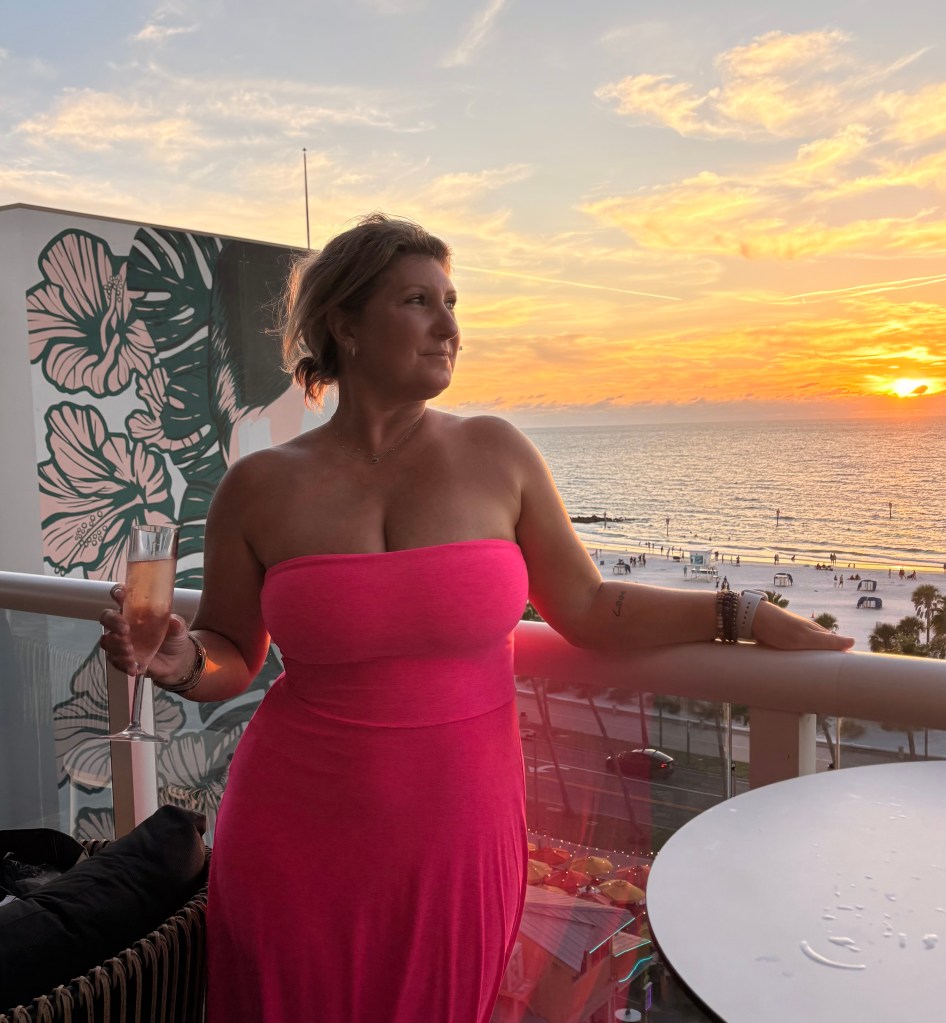
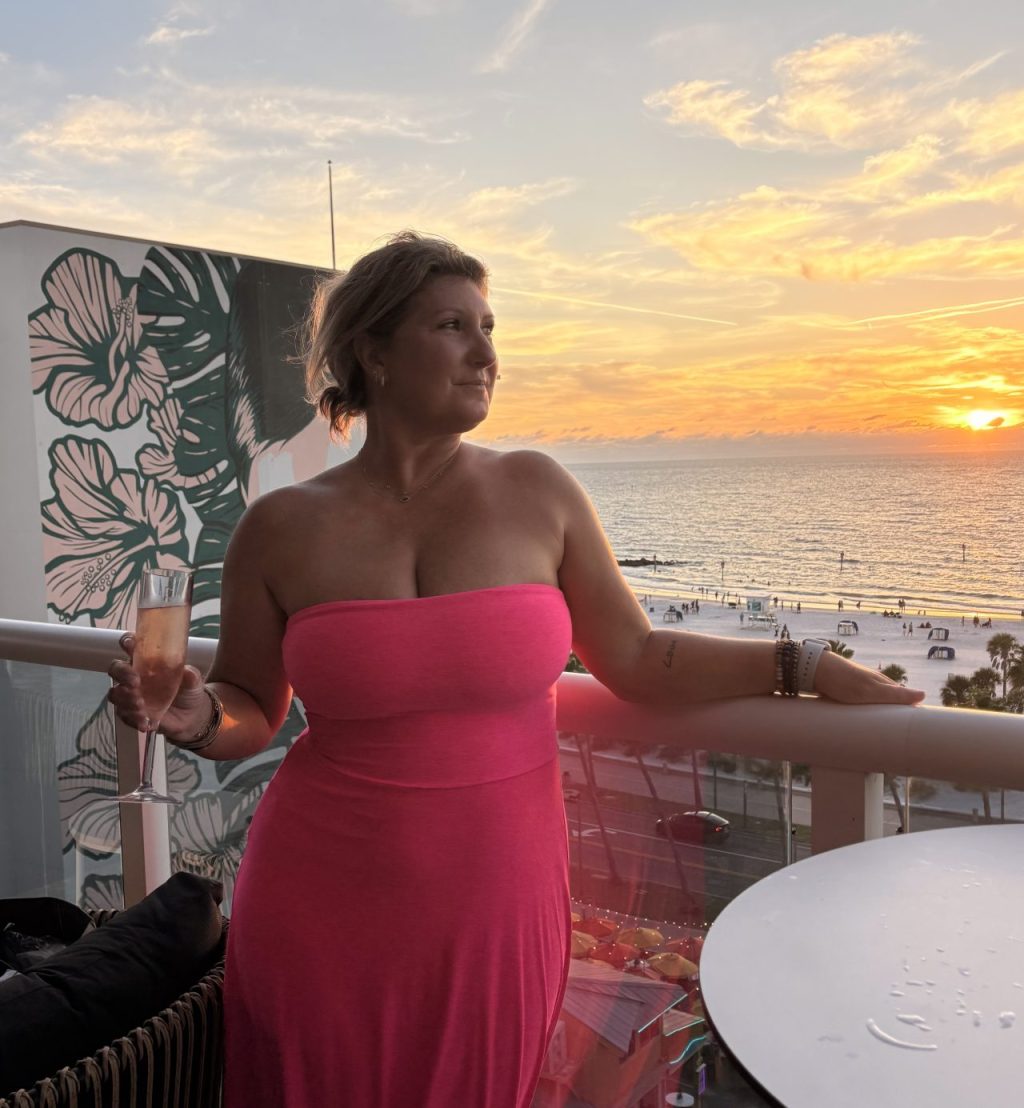
Your body has carried you through decades of life, raised children, survived stress, and kept you moving forward. It deserves a little softness. It deserves a little grace.
The next time you see someone who seems to have transformed overnight, smile, wish them well, and remember: they are on their path, and you are on yours.
Hold onto your health, cherish your femininity, and give yourself permission to just be.
What are your thoughts on aging gracefully versus the rise of quick physical transformations? How do you maintain your confidence as your body changes? Drop a comment below—I’d love to hear your perspective.


Leave a Reply